RM-CCT
The transport simulator.
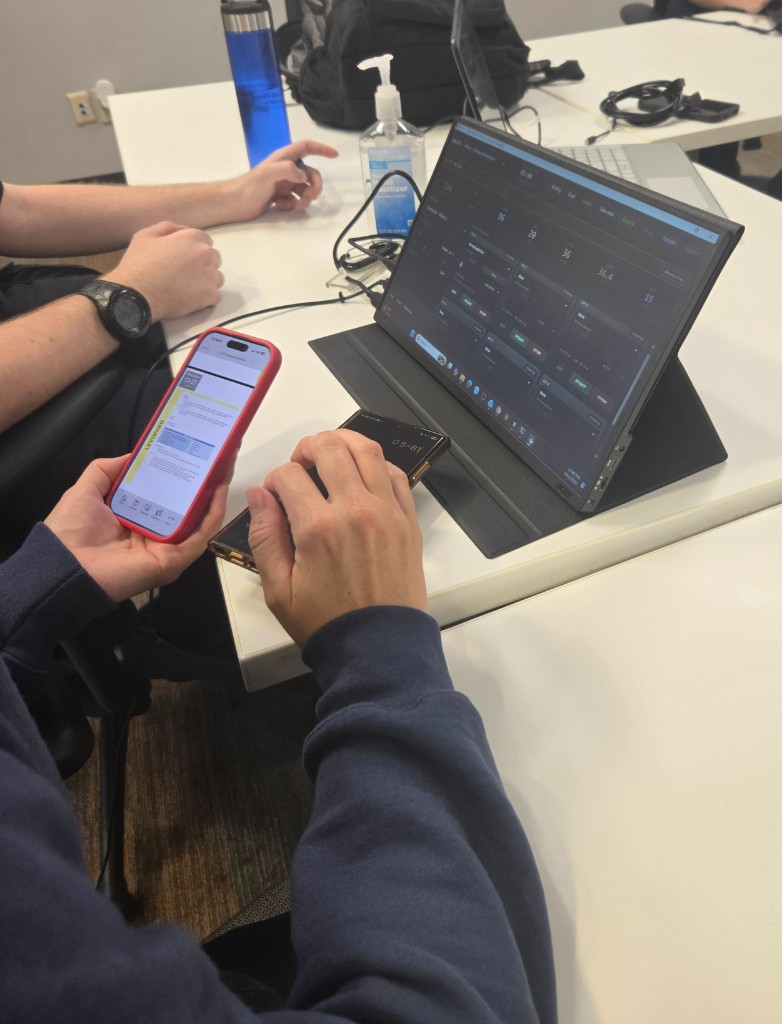
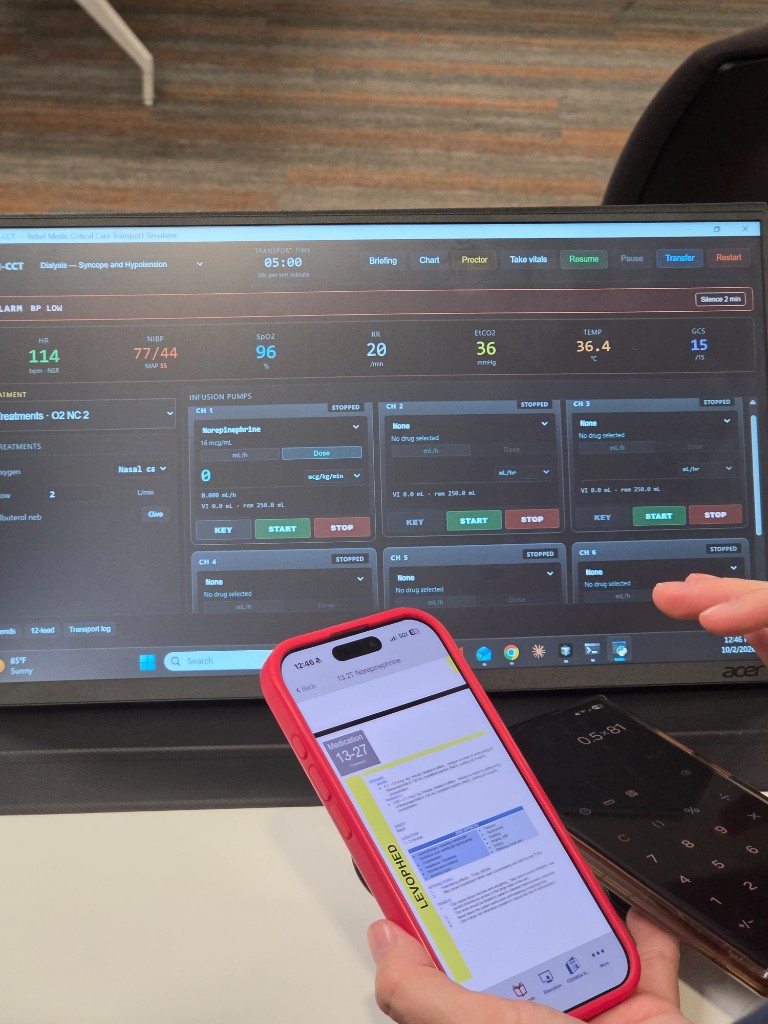
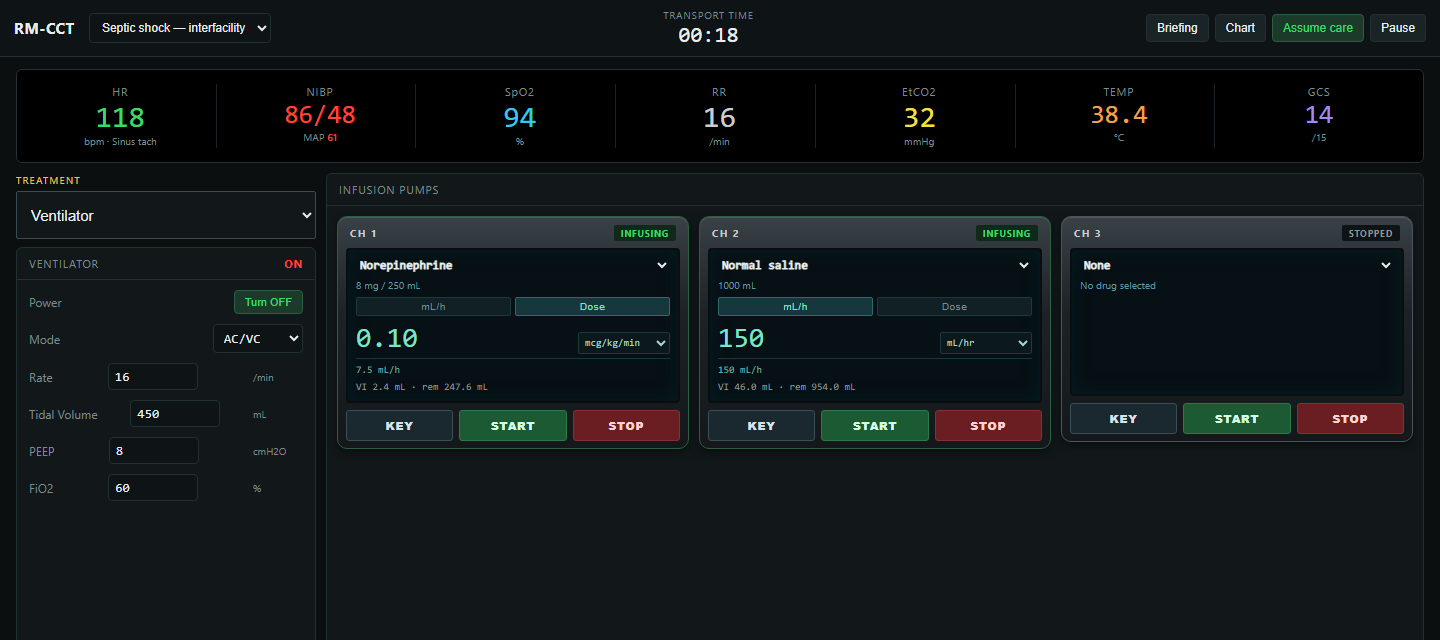
A critical care transfer that moves while you work. Drips change the monitor. The ventilator changes the gas. The 12-lead belongs to that call.
What the crew touches
- Six pumps, with real dose math.
- A ventilator for the CCT calls, hidden on the simple medic calls.
- Oxygen, from a cannula to a mask.
- A 12-lead on the chart for every scenario.
- A sequenced library. ALS transfers first, then CCT runs that include the vent.
The point of a call is a decision: leave the potassium alone, cut the insulin and hang dextrose, balance fluid and a pressor on a dialysis patient, read an anterior STEMI before you chase the ventilator.
Want to try it first? The free 14-day demo gives you one fully adjustable patient on the same pumps and vent. Try it free for 14 days.
The calls
The full version has these runs loaded. Standard medic transfers first, then the CCT calls.
Standard medic
- Hypokalemia, potassium already running
- Hyperglycemia, insulin running
- DKA, insulin and fluids
- A-fib with RVR, diltiazem
- NSTEMI, nitro
- Hypertensive emergency, nicardipine
- Asthma, continuous nebulizer
- Dialysis patient, hypotension
- Post-choking transfer
- Heart failure, milrinone
- Stroke, last known well
- Unstable ventricular tachycardia
CCT
- Septic shock on norepinephrine
- GI bleed, hemorrhagic shock
- Anaphylaxis after IM epinephrine
- Missed dialysis, hyperkalemia
- TBI, high carbon dioxide
- Vented asthma
- Anterior STEMI on a ventilator
- Massive PE, hypotension
- Inferior and right-ventricular STEMI
- Aortic dissection
- Labor, bradycardia, and a STEMI mimic
- Post-ROSC, soft pressure, anterior STEMI
- Ventilator breath stacking